Mozart, our Birthday Gift
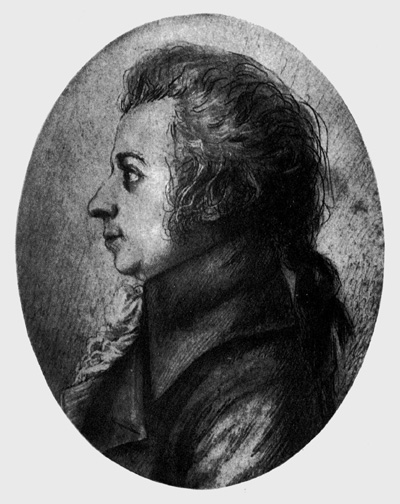
It is so easy to beat up on Mozart. All it takes is just a tiny bit of cynicism on the critic’s part. Intellectual pretension doesn’t hurt either. The result is a predictable set of contrivedly controversial accusations. “Mozart the composer who didn’t advance music. Mozart the composer who ‘merely’ perfected the itty-bitty prettiness of music. Mozart, the facile (in all meanings of the word) human being. Mozart the composer the Nazis first exploited with something disturbingly like the celebratory vigor of our times.”
 W. A. Mozart / J. Brahms / L. van Beethoven, Piano Concertos K459, K488 / no. 2 B-flat op. 83 / no. 3 op. 37, no. 5 op. 73, Pollini/Böhm, Abbado/WPh |
But with Mozart everywhere in this year of his 250th birthday, one is likely to encounter that one piece too many of Mozart that will send us to the dark, Mozart-denouncing side. Some will open alternative Shostakovich camps (his 100th anniversary falling somewhat by the wayside this year) and try to compare Mozart unfavorably to Bach. I understand them and sympathize with them. Often, the Mozart work is not the highlight of a concert I attend, and it is hardly ever the reason I attend. And I agree that I could listen to Bach endlessly whereas I would, sooner or later, tire of Mozart. But if I had to listen to half as much of Shostakovich, whom I love, as Mozart, whom I appreciate, I’d become a brooding mess and nervous wreck. With a Mozart overdose, the worst that can happen is that you’d grow a set of wings or act unnaturally nice (or fall back on the above-mentioned infantile arguments).
 Mozart, after all is said and done, is a genius. Listen, for example, to the slow movement of his Piano Concerto No. 23 (KV488). There is such an irresistible beauty, such perfection, such clarity of purpose in these couple of minutes, that over and over I am compelled to completely surrender myself to that music. My arms move away a bit from my body, the hands and face turn heavenward ever so slightly. It is here – and in many other works of his (too many to mention here – which is why he must be considered such a great, unique composer) where the arguments and the bickering end. I wish I could instantly play a movement such as that concerto’s every time I or someone else made a smart remark about Mozart. By snapping my fingers Karl Böhm might conduct the Vienna Philharmonic and Maurizio Pollini in front of them. Such delicacy (but never in the “Dresden China” approach), such beauty!
Nietzsche, for example - and like many of us and every solid ‘if-it-feels-good-it-can’t-be-good-for-us’ Lutheran/Protestant - may have been instinctively inclined to critique Mozart on the issues of being too rococo, on "his tender enthusiasms, his childlike delight in curlicues." Mozart was softer than the mountain-top philosopher should have liked, but too genial for him not to love. The power of the music is such that we can only do it away from the music. That is Mozart.