Elvis Hvorostovsky: Crooning the Russians
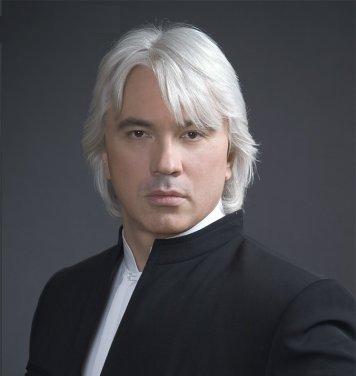 One of the advantages of hearing a string of choruses and arias of Russian operas is the convenient fact that you can enjoy music of some of the more (and rightly so) obscure operas of Rimsky-Korsakov, Rachmaninov and Rubinstein without having to sit through the whole thing. Also: You get a years' supply of "Slava-Slava" slapped around your ears. In the chorus of the "Procession of the nobles" from the Rimsky-Korsakov opera Mlada my ‘slava-counter’ broke down at 27. All that before Dmitri Hvorostovsky had even taken the stage on Wednesday at the Kennedy Center’s Concert Hall.
The Russian
His sumptuous, never over-sized, baritone with slight shades of the Russian Basso Profundo but more agility and lighter tone only furthers that impression. There are bigger voices and more individual or beautiful ones out there – and there are probably singers that look better, still… but as a package he is near unbeatable. Tchaikovsky’s “Polonaise” from Eugene Onegin was an engaging orchestral interlude before “Ne plach ditja” out of Rubinstein’s The Demon brought the Cathedral Choral Society (drilled by J. Reilly Lewis) together with Hvorostovsky who went on to show just how long a set of well trained lungs can hold a note. (Very long, indeed. First ‘uuhs’ and ‘aahs’ in the audience were noticable.)
 Moscow Nights, Hvorostovsky / Orbelian |
Tim Page, From Russia With Love and Patriotism (Washington Post, January 20) |
The Shostakovich waltz from his film music to “The First Echelon” is anonymously famous. I certainly have never seen that film but the music is hum-along familiar; seemingly the soundtrack to every film where the director wants music that says “Russia”. Although catchy, it’s a reminder that DSCH was not above writing the occasional piece of awful and trite schlock. Allegedly it was Shostakovich’s film music that kept the composer in Stalin’s more-or-less good graces for many years. If true, it is proof that, apart from having attained a secure spot in the triumvirate of 'most horrendous leaders in world history', he also had bad taste. Nothing sours me as much as standing on a heap of 50 million-plus rotten corpses and having a deficient aesthetic.
 Noodling off a couple more tearjerkers (if I were Russian, I would have been a sobbing mess, too – I know too well how I react to Bavarian and Austrian folk fare when it smells of Heimat), Hvorostovsky had the audience eat out of his hand. That he was miked for these songs was the necessary compromise of not wanting to have to belch these songs out like opera arias but still being heard in the last rows of the filled hall. Along with him, the Russian folk-instrument ensemble "Style of Five" provided some authentic sounds with bayan (accordion), balalayka and a balalayka cousin of Mongolian origin, the three string domra.
Although the Chorus’ contribution was well received, I imagine that a Russian Choir might have brought more to the performance than the timid Cathedral Chorus Society’s singing. That full, sonorous and ringing tone was never even approximated. Three encores of the most loved and famous of these “War Songs”, “Katyusha”, “Podmoskovnye Vechera” (Moscow Nights) and “Ochi Chernye” (Dark Eyes), brought the swooning crowd to their feet. Then Elvis Hvorostovsky left the building; alas not before signing CDs to exited hordes of fans.